


2026 Best Flying Inflatable Boat for Sale and Price
A Flying Inflatable Boat can attract attention with its promise of portability and unusual performance. Yet the name alone does not explain what the craft can safely do. Buyers should check the hull design, engine specifications, payload, and manufacturer’s operating guidance before comparing prices. A close look matters. Seams, valves, floor panels, and transom fittings can reveal more than polished listing photos.
Industry figures offer useful context, but not a direct price quote. The National Marine Manufacturers Association’s 2023 economic-impact study estimated that recreational boating generated $230.3 billion in annual U.S. economic activity and supported about 812,000 jobs. This broad figure covers many boating segments; it does not establish the market size or fair price of flying inflatable boats. That distinction is important. For a 2026 buying decision, compare complete packages, including the boat, propulsion system, safety equipment, warranty, and delivery costs. Ask sellers to document materials, load limits, and any claimed flight capability. Do not treat a dramatic product label as proof of performance. A compact craft may pack neatly in a vehicle, but its real value depends on the water conditions and use it is designed for. Some listings may omit details. That is a reason to pause, ask questions, and compare specifications carefully.
What Is a Flying Inflatable Boat and How Does It Work?
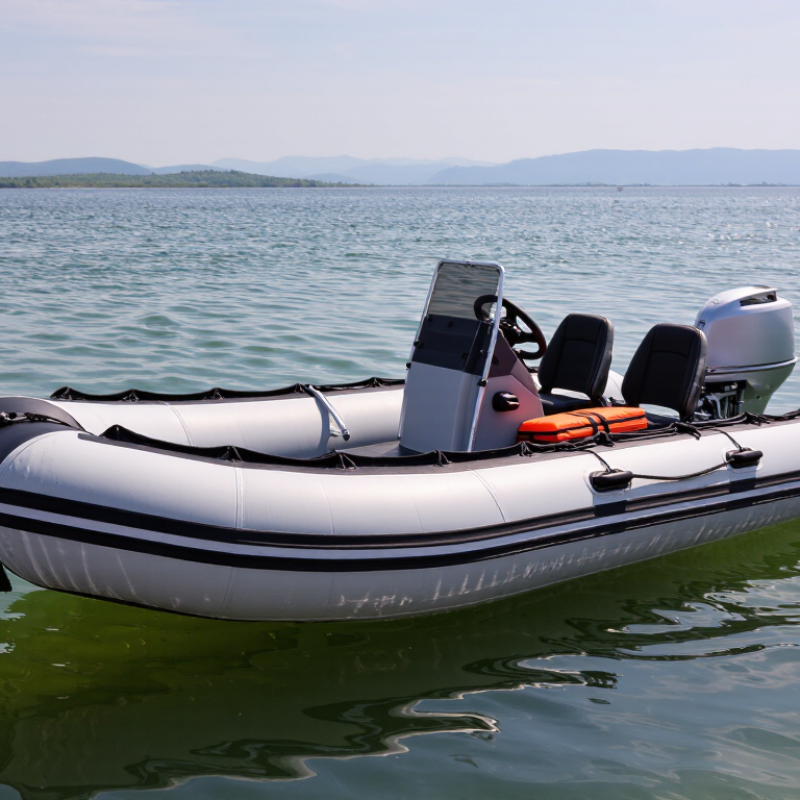
A flying inflatable boat is a lightweight craft that combines an inflatable hull with a fabric wing and a powered propulsion system. The wing creates lift as air flows across it; the engine and propeller provide forward thrust. In many designs, the pilot steers with control lines while seated in or attached to the boat. The hull mainly provides flotation and a place for occupants, rather than lifting the craft. Some models are designed for water takeoffs, but configurations vary. The name sounds simpler than the machine is.
On a suitable surface, the wing fills with air as the craft moves forward. When it produces enough lift, the hull rises clear of the water. Wind, total load, and engine condition can all affect this process. Small details matter. Before operation, inspect the hull seams, inflation pressure, propeller area, and control lines. A soft hull or tangled line can change how the craft handles. Operators also need proper training and calm, open conditions; gusts can make control difficult. I would not assume every inflatable model can safely launch from water, even if it looks similar. Check the specific design’s instructions and performance limits.
2026 Best Flying Inflatable Boat for Sale and Price — What Is a Flying Inflatable Boat and How Does It Work?
| Topic | What to know | Practical buying or price guide |
|---|---|---|
| What it is | “Flying inflatable boat” is a descriptive term, not a standardized aircraft category. It usually refers to an inflatable boat paired with a powered paraglider or another aircraft system. | Confirm exactly what is included in a sale: boat, engine, propeller cage, wing, harness, controls, and safety equipment may be priced separately. |
| How it works | The engine-driven propeller produces thrust. A paraglider wing provides lift when inflated by airflow; the boat’s inflatable tubes provide buoyancy on the water. The boat does not generate the aerodynamic lift. | Ask whether the proposed boat-and-aircraft combination has been tested together and whether the maker specifies operating limits for wind, waves, load, and takeoff conditions. |
| Main components | Typical elements include an inflatable hull, a propulsion unit, a guarded propeller, a compatible wing, a pilot harness or seat, and appropriate flotation and personal safety gear. | Check material specifications, repairability, engine documentation, propeller guarding, corrosion protection, and compatibility between all parts. |
| Hull and capacity | Inflatable boats vary in length, tube diameter, floor construction, and rated load. There is no single capacity or hull specification for this type of setup. | Use the boat’s stated maximum load and the aircraft system’s permitted total takeoff weight. Include the pilot, passengers, fuel, equipment, and any carried cargo. |
| Price and availability in 2026 | There is no reliable universal “flying inflatable boat” retail price because the term covers different combinations, and complete systems may be custom-built or sold as separate components. | Request an itemized, current written quotation. Compare the complete delivered setup, taxes, shipping, assembly, training, maintenance, and replacement-part costs rather than relying on a generic price range. |
| Best choice for a buyer | The best option is the one whose documented weight limits, intended use, service support, and operating requirements suit the pilot and local conditions. | Before purchase, have a qualified instructor or aviation professional review the configuration and verify applicable aviation, watercraft, registration, and insurance rules in your area. |
| Safety note | Powered paraglider and aircraft operations require training and suitable weather. Water operations also involve drowning, capsize, and cold-water risks. | Do not treat an inflatable hull as proof that an aircraft configuration is safe or legally approved. Follow the equipment manuals and seek proper instruction before operating. |
Price note: No standardized product category or universal 2026 sale price is assumed in this table; obtain current, itemized quotations for the specific configuration.