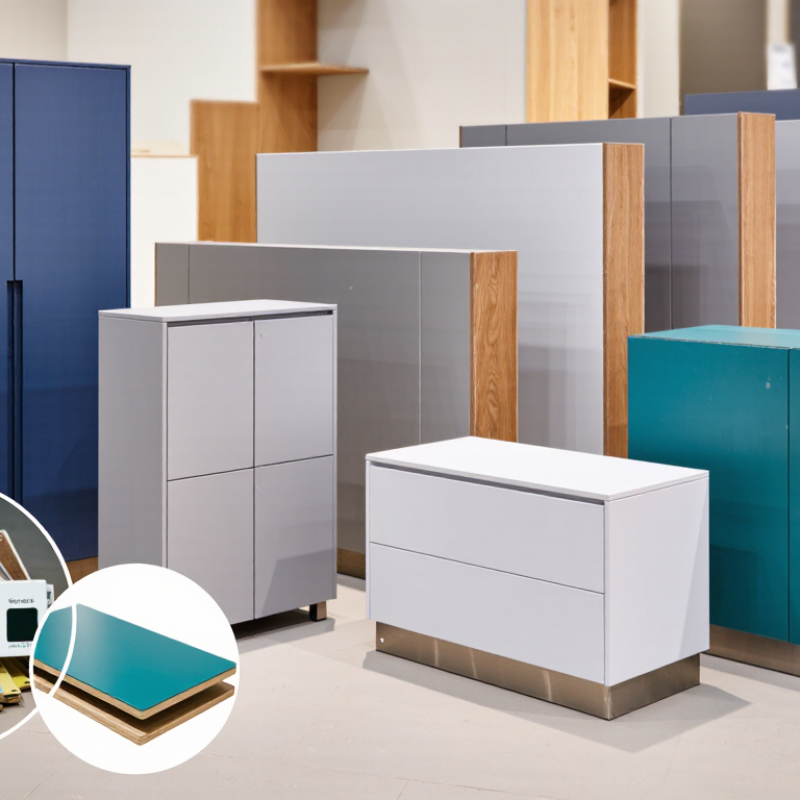
10 Best Powder Coated MDF Furniture Manufacturers

Powder Coated MDF furniture combines a smooth engineered-wood surface with a durable, color-rich finish. It suits wardrobes, cabinets, office storage, and retail displays where clean lines and repeatable colors matter. But the final result depends on more than the coating. MDF grade, panel thickness, edge treatment, surface preparation, and curing control all affect appearance and service life.

The market context is substantial. Grand View Research estimated the global furniture market at USD 677.09 billion in 2023 and projected continued growth through 2030. That figure covers furniture broadly, not powder-coated MDF alone. It signals scale, not proof that every supplier is equally capable. Details matter. When comparing manufacturers, buyers should examine production experience, finish consistency, sample approval processes, customization options, quality checks, and export support. Ask how the company handles corners and edges, where coating defects can become visible under bright showroom lighting. Request samples and clear specifications before placing a large order. A polished catalog is useful, but it cannot replace evidence from actual production. This list introduces ten manufacturers worth evaluating, while recognizing that the best choice depends on your design, volume, budget, and delivery needs. Some details may be hard to verify publicly; that uncertainty deserves attention, too.

10 Best Powder Coated MDF Furniture Manufacturers

What Powder-Coated MDF Furniture Is and How It Is Made

Powder-coated MDF furniture combines engineered wood panels with a dry, heat-cured finish. MDF is made from compressed wood fibers and resin, creating a smooth, consistent surface for doors, shelves, and cabinet fronts. Unlike metal, MDF does not naturally conduct electricity, so coating systems may use a conductive primer or prepared surface to help powder adhere.

The process starts with cutting and sanding the panels, then sealing exposed edges to reduce fiber absorption. A specialist applies powder electrostatically and cures it with controlled heat. Because MDF can be damaged by excessive heat, manufacturers select suitable powders and carefully manage curing time and temperature. The result can be a uniform finish with fewer visible brush marks, but it is not automatically waterproof. Poorly sealed edges may still swell if repeatedly exposed to moisture.

A small edge defect matters.

Tips: Ask how edges are sealed and what cleaning method the finish tolerates. Use a soft, slightly damp cloth; avoid abrasive pads. Inspect corners closely, since impact damage can expose the MDF core. Powder coating offers a sleek surface, yet repairs may be less straightforward than repainting. That trade-off deserves attention before choosing furniture for busy rooms.

How to Assess Powder-Coated MDF Furniture Manufacturers

Assess a manufacturer’s process, not just its finish photos. Ask for the MDF grade, panel thickness, edge-sealing method, pretreatment details, and curing temperature records. Powder coating can look smooth on a sample yet chip at corners if edges are poorly sealed. The U.S. EPA’s AP-42 surface-coating guidance describes powder coating as producing negligible VOC emissions during application because it uses no solvent carrier. That does not mean the entire factory process has zero emissions; pretreatment and energy use still matter.

Request test results tied to the same MDF thickness and coating system used in production. ASTM D3359 rates coating adhesion from 0B to 5B; 5B means no coating removal in the test. Ask how the supplier checks adhesion, film thickness, color consistency, and resistance to scratches or household cleaners. Review dated batch records and inspect a cut edge under bright light. If the supplier only offers a display sample, treat that as limited evidence. A small sample may not reveal batch variation.

Tips: Request a production sample, not only a showroom piece. Ask for test methods, results, and a clear pass criterion. Check how defects are logged and corrected. Be cautious when a supplier promises “perfect” consistency; finishes can vary slightly across batches.

Ten Notable Manufacturers and Their Product Specialties

Among powder-coated MDF furniture makers, product specialties reveal more than glossy catalogs. Cabinet specialists often focus on flat, easy-clean doors and consistent color matching. Office furniture makers tend to offer desk panels, modesty screens, and cable-ready surfaces. Some manufacturers specialize in children’s storage, using rounded corners and sturdy drawer construction. Others make compact apartment furniture, such as nesting tables and slim wardrobes. Edges matter.

A further group serves retail spaces with durable display plinths and shelving. Kitchen-focused makers may offer moisture-conscious panels, though powder coating does not make MDF waterproof. Custom furniture workshops can accommodate unusual dimensions and small production runs. Larger factories typically emphasize repeatable finishes across high-volume orders. Design-led makers often provide textured colors or matte surfaces. These are useful categories, not a verified ranking; capabilities vary by factory and production line.

Tips: Request a finished sample, not just a color chip. Check edge coverage, surface smoothness, and coating adhesion. Ask how the MDF is prepared and cured, and compare samples after handling. A beautiful finish can still hide weak joints.

Powder-Coated MDF Furniture: Common Panel Thicknesses

Common nominal MDF thicknesses used in furniture include 6, 9, 12, 15, 18, and 25 mm. Available sizes vary by supplier and application; these figures are material options, not a ranking or count of manufacturers.

Comparing Manufacturing Capabilities and Market Reach

A useful comparison of powder coated MDF furniture manufacturers starts on the factory floor. Look for controlled sanding, sealed edges, and a coating line designed for MDF rather than metal. Heat and surface preparation must be managed carefully. Otherwise, corners may look smooth while broad panels show uneven texture or color. Ask how manufacturers check adhesion, finish consistency, and dimensional tolerances across a full production run. Small samples help, but they do not always reveal problems on large doors or shelves. Batch capacity matters too. A workshop suited to custom pieces may struggle with repeat orders, while a high-volume plant may offer fewer finish options.

Market reach depends on more than a list of countries served. Reliable export operations need protective packaging, clear lead-time estimates, and experience coordinating shipments of flat panels or assembled furniture. Ask whether the supplier can adapt carton sizes, labeling, and product specifications for different customer requirements. Regional warehouses or installation partners can shorten delivery, but add cost and coordination. Evidence matters: request recent project examples, inspection records, and references where possible. Then compare what is actually documented, not just what a sales page promises.

There is no perfect scorecard. One weak point remains: published capacity figures can hide seasonal delays or subcontracted work. A careful buyer should verify who performs each production step and how defects are handled.

10 Best Powder Coated MDF Furniture Manufacturers - Comparing Manufacturing Capabilities and Market Reach
Industry comparison framework: the entries below describe common manufacturer profiles, not named companies or a verified company ranking. Capabilities and geographic coverage vary by facility, coating system, product design, and order requirements.
No. Manufacturer profile Typical manufacturing capabilities Powder-coated MDF suitability Common product focus Typical market reach Key sourcing consideration
1 Large integrated furniture OEM Combines panel processing, furniture assembly, finishing, quality control, and export packing within a coordinated production system. Can be suitable for repeatable flat-panel programs when the factory has a compatible MDF powder-coating line and validated curing process. Case goods, storage units, desks, and multi-piece furniture programs. Often serves domestic and export customers through direct sourcing or distributor channels. Confirm that powder coating is performed in-house or by a qualified partner, and request product-specific test results.
2 Contract furniture specialist Typically manages project specifications, repeat orders, production scheduling, and documentation for commercial installations. Useful where coated MDF panels are part of a larger furniture package; compatibility depends on the specified panel design and service conditions. Workplace furniture, meeting-room furniture, and commercial storage. May supply projects across regional or international markets, often through contract dealers or project partners. Check compliance documentation, finish consistency across batches, and capacity to meet phased delivery schedules.
3 Office furniture manufacturer Usually offers standardized product families, configurable dimensions, and production planning for recurring institutional or business orders. Flat coated MDF components can be used for selected desks, cabinets, and panels; edge details and impact exposure need careful review. Desks, credenzas, pedestals, cabinets, and office storage systems. Commonly reaches customers through business-to-business sales, dealers, and office-furnishing projects. Evaluate abrasion, scratch, cleaning-chemical, and edge-durability requirements for the intended workplace.
4 Kitchen and cabinetry manufacturer Focuses on dimensionally coordinated panels, cabinet construction, hardware integration, and made-to-order or modular production. Potentially suitable for selected cabinet fronts and panels, provided the coating system and MDF construction meet the intended moisture and cleaning demands. Kitchen cabinets, utility storage, wardrobes, and fitted interiors. Typically serves local and regional markets, with some manufacturers shipping modular products farther afield. Ask about moisture exposure limits, sealed edges, panel flatness, and care instructions; powder coating does not make MDF waterproof.
5 Retail display and fixture producer Often handles short-run customization, varied panel shapes, graphic or hardware integration, and coordinated production for store rollouts. Can work well for specified decorative panels and fixtures where the coating process supports the design, color, and surface requirements. Display units, shelving, counters, point-of-sale fixtures, and branded interior components. May support single-market installations or multi-location retail programs through project logistics. Confirm color matching, sample approval, replacement-part availability, and packaging for transport to multiple sites.
6 Education furniture manufacturer Typically produces repeatable furniture designs and coordinates material choices around institutional use and maintenance needs. Coated MDF may suit selected indoor panels; suitability depends on impact exposure, cleaning practices, and the complete furniture construction. Classroom storage, desks, learning-area furniture, and library units. Usually supplies schools and public or private education projects through tenders, dealers, or direct contracts. Request evidence for relevant durability and safety requirements; verify that edges and corners are appropriate for the use environment.
7 Healthcare and institutional furniture producer May offer project-specific specifications, documented quality processes, and coordination with facility requirements. Use should be assessed against the exact cleaning agents, hygiene procedures, and exposure conditions; coating performance is system-specific. Storage, work surfaces, interior panels, and selected non-critical furniture components. Commonly serves regional healthcare and institutional projects, sometimes through specialist procurement channels. Obtain written chemical-resistance and cleaning guidance for the finished assembly; do not infer suitability from appearance alone.
8 Hospitality furniture manufacturer Often balances design customization with production repeatability for guest rooms, public areas, and renovation projects. May be appropriate for interior furniture panels where the specified coating, substrate, and construction are validated for the setting. Guest-room case goods, reception furniture, wardrobes, and interior storage. May work through interior designers, purchasing groups, contractors, or hotel project suppliers across several regions. Review finish samples under project lighting and confirm repair, replacement, and delivery arrangements for project phases.
9 Modular and flat-pack furniture producer Emphasizes standardized components, efficient nesting and packing, repeatable assembly details, and distribution-ready packaging. Coated MDF panels can be considered for compatible designs; coating, machining sequence, and edge treatment must be coordinated. Ready-to-assemble storage, shelving, desks, and compact home furniture. Potentially broad retail or e-commerce reach when supported by suitable packaging and distribution infrastructure. Test assembled products for transit damage and confirm that drilled holes, cut edges, and connectors are addressed in the finish specification.
10 Regional custom furniture workshop Usually offers flexible dimensions, small-batch production, local installation, and direct communication with designers or end users. May source coated panels or use a specialist coating partner; process control and available panel sizes can differ from large-scale production. Custom cabinetry, built-ins, bespoke storage, and one-off furniture pieces. Primarily local or regional, with reach shaped by installation services and project logistics. Clarify who controls coating quality, how samples are approved, and how replacements or touch-ups will be handled.

Choosing a Manufacturer for Your Furniture Project

Choosing a manufacturer for powder-coated MDF furniture starts with understanding how they handle the material. Ask about panel thickness, edge preparation, and the coating system used for MDF. Powder coating requires controlled heat, so the supplier should explain its curing process and how it avoids warping or surface defects. Ask to see samples. Check corners and edges closely; these areas often reveal uneven coverage or poor preparation.

Request a sample made to your actual color, finish, and thickness before approving a full order. Compare it under the lighting where the furniture will be used. Small details matter. Ask how the manufacturer checks color consistency, coating adhesion, dimensions, and packaging. Clear tolerances and written inspection steps make later discussions easier. Also confirm lead times, minimum order quantities, and how replacement parts are handled. A polished sample is useful, but it does not prove every production run will match. Ask what records or checks support that promise. If answers stay vague, pause and ask again; it may feel awkward, but assumptions can become costly once panels are cut and assembled.