


China Top 10 Biological Water Treatment Suppliers
Biological Water Treatment is central to modern wastewater management, helping remove organic matter and nutrients through controlled microbial processes. UN-Water’s 2024 wastewater update reports that 42% of household wastewater worldwide was not safely treated in 2022. The report also estimates that 113 billion cubic metres of household wastewater were released with inadequate or no treatment. These figures show why treatment capacity matters. They also underline the need to assess suppliers on more than equipment price.
China’s market includes suppliers offering activated sludge systems, moving-bed biofilm reactors, membrane bioreactors, and anaerobic treatment solutions. Their projects can differ greatly in scale, influent quality, local operating conditions, and maintenance needs. A system handling food-processing wastewater may not suit a municipal plant. Small details matter: blower energy use, sludge handling, control settings, and access to replacement parts can shape daily performance.
This overview of China’s top 10 suppliers is a practical starting point, not a universal ranking. This is not a perfect comparison. Buyers should verify project references, treatment targets, operating records, and service arrangements directly with each company. Where possible, compare results using consistent measures, such as effluent quality, energy consumption, and system uptime. Published case studies are useful, but operating data and site visits can reveal gaps that brochures may miss. Industry reports provide context; they cannot replace project-specific checks.
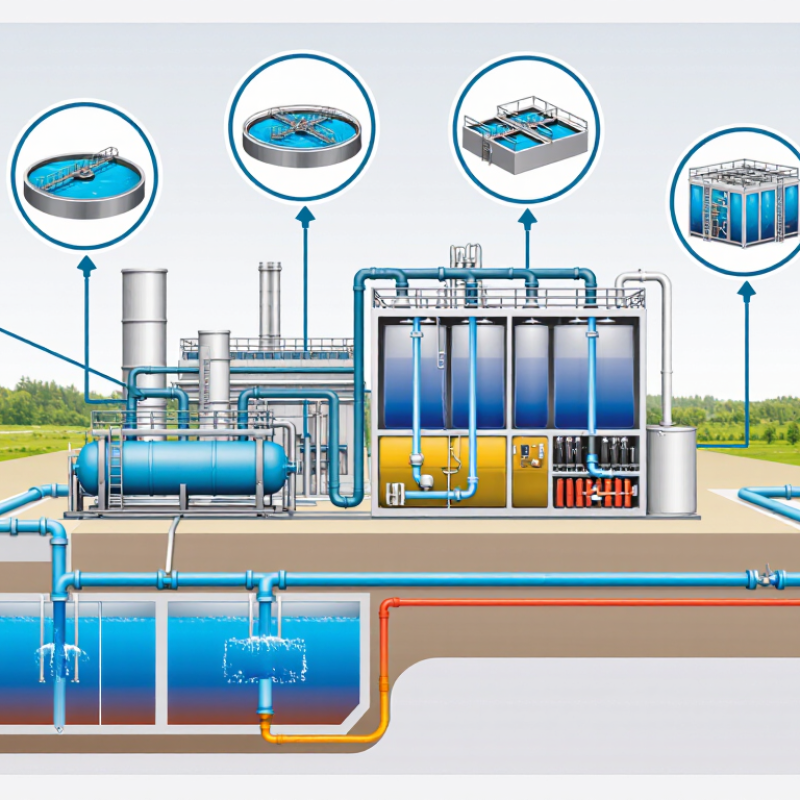
Biological Water Treatment in China: Scope, Processes, and Supplier Landscape
China’s biological water-treatment sector serves municipal plants, industrial parks, and decentralized facilities. Its scope extends from primary settling to biological nutrient removal and final polishing. In the 2022 Urban and Rural Construction Statistical Yearbook, China’s urban wastewater treatment rate was reported at 98.1%. Treatment coverage is high, but effluent quality and operating costs still vary by site.
Common process choices include activated sludge, sequencing batch reactors, moving-bed biofilm systems, and membrane bioreactors. The right fit depends on influent strength, land availability, temperature, and discharge targets. The Ministry of Ecology and Environment’s 2023 China Ecological Environment Status Bulletin reported that 89.4% of monitored surface-water sections met Grade I–III standards. That national figure is useful context, not proof of any individual plant’s performance. Supplier capabilities range from process design and equipment integration to commissioning and long-term maintenance. A polished proposal can still miss sludge handling or seasonal loading. Not automatically.
Tips: Ask suppliers for site-specific influent data, guaranteed effluent limits, energy use per cubic metre, and references from comparable facilities. Check how they manage wet-weather peaks and process upsets. A low equipment price may hide higher aeration or maintenance costs.
China Biological Water Treatment: Typical Process Performance
Indicative BOD₅ removal efficiency ranges for common biological wastewater treatment processes
Bars show indicative operating ranges, not China-specific market shares or supplier rankings. Actual removal depends on wastewater characteristics, system design, and operating conditions.
Core Technologies: Activated Sludge, MBBR, MBR, and SBR
Biological treatment turns dissolved pollution into biomass, but the right process depends on wastewater strength, space, and operator skill. The UN World Water Development Report 2017 estimated that over 80% of wastewater worldwide returns to the environment untreated or without reuse. That gap makes dependable process design essential. Good design starts with the influent.
Activated sludge is a proven option, though aeration and sludge handling affect operating costs.
MBBR systems use moving plastic carriers to support biofilms, making them useful where compact upgrades are needed.
MBR combines biological treatment with membrane filtration and can produce low-solids effluent, but membrane cleaning and replacement need planning.
SBR treats wastewater in timed fill, react, settle, and decant stages, offering flexible operation in one tank.
No process is magic. Actual results vary with temperature, loading, and maintenance.
Tips:
Ask suppliers for pilot data from wastewater similar to yours. Check energy use, sludge production, membrane or carrier replacement, and control-system support. Compare performance guarantees with local discharge requirements. Small detail, big difference: request a clear plan for startup and operator training. A strong proposal should show both design assumptions and what happens when influent conditions change.
Process Benchmarks: MLSS of 2,000–4,000 mg/L and 5–15-Day SRT
When assessing biological water treatment suppliers in China, look beyond equipment lists. Ask how the proposed process will maintain mixed liquor suspended solids (MLSS) around 2,000–4,000 mg/L and a sludge retention time (SRT) of 5–15 days. These are useful reference ranges, not universal setpoints. Wastewater composition, temperature, and treatment targets can shift the design.
Numbers need context.
MLSS indicates the concentration of suspended solids in the aeration tank; SRT estimates how long biomass remains in the system. A suitable balance supports biological treatment without overloading aeration or clarification. Operators should also monitor dissolved oxygen, sludge settling, and the clarifier sludge blanket.
A high MLSS reading alone does not prove that treatment is stable. Poor settling can cause solids to escape with the treated water.
During commissioning, daily records help reveal whether the selected SRT fits actual operating conditions. For example, a sudden increase in influent load may change oxygen demand and sludge characteristics. Suppliers should explain how operators can adjust wasting and aeration, not simply quote benchmark values. A benchmark can still mislead. It is tempting to treat the stated ranges as targets, but site data should guide adjustments, and results should be verified over time.
China’s Top 10 Suppliers: Compare Capacity, Projects, and Certifications
When comparing China’s top ten biological water treatment suppliers, capacity should mean more than a headline figure. Ask whether the stated flow rate refers to daily design capacity, tested operation, or combined project output. A plant rated for 20,000 cubic meters per day may perform differently when influent loads change. Request operating data, peak-flow records, and the treatment process used. Numbers need context.
Project experience offers another useful comparison. Look for installations handling wastewater similar to yours, such as food processing, textiles, or municipal sewage. Check the project’s scale, commissioning date, and whether performance continued after handover. A reference site can reveal details missing from a proposal: tank layout, sludge handling, and operator workload. Small details matter. Still, one successful project does not prove every design will suit a new site.
Certifications should be checked by scope, issuing body, and validity date, not just listed in a brochure. Ask which facility or process the certificate covers, and request supporting records where appropriate. Compare suppliers using the same criteria: verified capacity, relevant project references, documented treatment results, and after-sales support. Be cautious with unusually broad claims. I would also leave room for uncertainty; site conditions, seasonal temperatures, and influent variation can shift results. A neat comparison table helps, but it cannot replace a technical review of the actual water and operating conditions.
GB 18918 Grade 1A: COD ≤50 mg/L and BOD₅ ≤10 mg/L Targets
GB 18918 Grade 1A sets key treated-effluent targets: COD at or below 50 mg/L and BOD₅ at or below 10 mg/L. For biological treatment suppliers, these figures should guide process design, not just appear in a proposal.
Actual results depend on influent strength, temperature, aeration, and sludge conditions. A sudden load change can push readings upward. Small details matter.
When comparing suppliers in China, ask for performance data from projects with similar wastewater and operating conditions. Check how the system controls dissolved oxygen, sludge age, and solids separation. Request a clear monitoring plan, including representative sampling and records for both COD and BOD₅.
If wastewater contains hard-to-degrade organics, biological treatment alone may not consistently meet the COD target; a suitable polishing stage may be needed. No process is effortless. Operators still need training, routine checks, and time to respond when the aeration basin turns unstable.
Targets look precise on paper, but site data should confirm whether they are realistic.