How to Choose the Right Shipping Container Sizes for Your Needs
Choosing the right shipping container sizes is crucial for a variety of logistics and storage needs. With the ever-increasing demand for efficient shipping and storage solutions, understanding the different dimensions and specifications of shipping containers can significantly impact your project’s success. Whether you are transporting goods across countries or looking for a secure storage option, selecting appropriate shipping container sizes will ensure you maximize space, minimize costs, and optimize functionality.
In this guide, we will explore the various sizes of shipping containers available in the market, from the standard 20-foot and 40-foot containers to specialized options like high cube and refrigerated units. By comprehensively examining the advantages and disadvantages of each size, you will be better equipped to make an informed decision that aligns with your specific requirements. We will also discuss how factors such as cargo type, transportation methods, and storage limitations can influence your choice of shipping container sizes. By the end of this guide, you will have the knowledge necessary to select the most suitable shipping containers for your unique needs, ensuring efficiency and effectiveness in your shipping and storage operations.

Understanding Standard Shipping Container Sizes and Types
When selecting the right shipping container sizes for your needs, it’s essential to understand the various standard sizes and types available in the market. Shipping containers are primarily available in two standard lengths: 20 feet and 40 feet. According to a report by the International Organization for Standardization (ISO), these two sizes account for approximately 80% of the global containerized trade. The 20-foot container typically offers a volume of 1,172 cubic feet, while the 40-foot container can hold up to 2,390 cubic feet, making them suitable for a wide range of goods from consumer electronics to agricultural products.
Additionally, there are specialized containers designed for specific requirements. For instance, refrigerated containers are essential for transporting perishable goods and maintain temperatures between -5°C to 30°C. A report from the Container Owners Association indicates that refrigerated containers have seen a 5% increase in demand over the last three years, reflecting the growing need for temperature-sensitive shipping solutions. Understanding these container types and their dimensions not only aids in logistics planning but also improves cost efficiency and safety during transport. Choosing the appropriate container size ensures that businesses can maximize their shipping capacity while minimizing potential wastage during transportation.
Factors to Consider When Choosing Shipping Container Sizes
When choosing the right shipping container sizes, it's crucial to consider several factors that can significantly impact your logistics and storage efficiency. One key aspect is the volume of goods you need to transport or store. According to the World Shipping Council, the most commonly used container sizes are 20-foot and 40-foot containers, which can carry around 33 cubic meters and 67 cubic meters of cargo, respectively. Understanding your volume requirements will help you avoid overpaying for unused space or compromising on capacity by selecting a too-small container.
Another important factor is the type of goods being shipped. Specific items might require different container specifications due to their dimensions, weight, or fragility. For instance, perishable goods may necessitate refrigerated containers, which come in standard sizes like 20-foot and 40-foot but have a different internal layout for temperature control. Additionally, the International Maritime Organization (IMO) highlights that weight distribution is critical; exceeding the weight limits can risk container integrity during transit. Evaluating your shipping needs in light of these considerations ensures optimal container selection, aiding in cost-effectiveness and enhanced safety during transportation.
Analyzing Cargo Volume and Weight for Optimal Container Selection
Choosing the right shipping container size is essential for optimizing logistics while minimizing costs. One key factor in achieving this is analyzing the cargo volume and weight. According to the International Marine Organization, shipping containers come in standard sizes, typically 20-foot, 40-foot, and 40-foot high cube variations. The nominal capacity of a 20-foot container is about 33 cubic meters, whereas a 40-foot container can hold approximately 67 cubic meters, making it clear that dimensions play a crucial role in meeting shipping requirements.
When determining which container to use, it's also important to consider the weight of the cargo. The maximum gross weight for a standard 20-foot container can reach up to 24,000 kg, while a 40-foot container can accommodate around 30,480 kg. However, it is advisable to keep the actual cargo weight below 80% of the container's maximum to ensure safety during transit. According to a report from the World Shipping Council, better weight distribution within containers also contributes to reduced risk of cargo damage. Thus, effective planning based on both volume and weight parameters not only enhances supply chain efficiency but also fosters sustainable shipping practices.
How to Choose the Right Shipping Container Sizes for Your Needs
| Container Size |
Dimensions (L x W x H) |
Max Weight Capacity |
Volume Capacity |
Common Uses |
| 20 ft Container |
20' x 8' x 8.5' |
22,000 lbs (10,000 kg) |
1,169 cu ft (33.2 m³) |
General cargo, household goods |
| 40 ft Container |
40' x 8' x 8.5' |
44,000 lbs (20,000 kg) |
2,390 cu ft (67.7 m³) |
General cargo, bulk shipments |
| 40 ft High Cube |
40' x 8' x 9.5' |
44,000 lbs (20,000 kg) |
2,694 cu ft (76.3 m³) |
Larger cargo, machinery, equipment |
| 45 ft High Cube |
45' x 8' x 9.5' |
67,200 lbs (30,000 kg) |
3,040 cu ft (86.1 m³) |
Large machinery, heavy items |
Cost Implications of Different Shipping Container Sizes
When selecting the right shipping container size for your needs, it is crucial to consider the cost implications associated with each size. Smaller containers, such as 20-foot ones, typically offer lower rental or purchase prices, making them an attractive option for individuals or businesses with limited storage requirements. However, if you underestimate your space needs, opting for a smaller container might lead to additional costs down the line, such as frequent shipping or storage fees if you need to rent or purchase additional containers.
Conversely, larger containers, like 40-foot models, can provide significant savings in the long run, especially for businesses with high volume shipping needs. They often come at a slightly higher initial investment but can reduce per-unit shipping costs. Additionally, having extra space minimizes the risk of overflow and associated logistical challenges, ultimately streamlining operations. Understanding these cost dynamics not only helps in budgeting accurately but also ensures that the choice of container aligns with overall business strategy and operational efficiency.
Cost Implications of Different Shipping Container Sizes
Common Misconceptions About Shipping Container Capacities
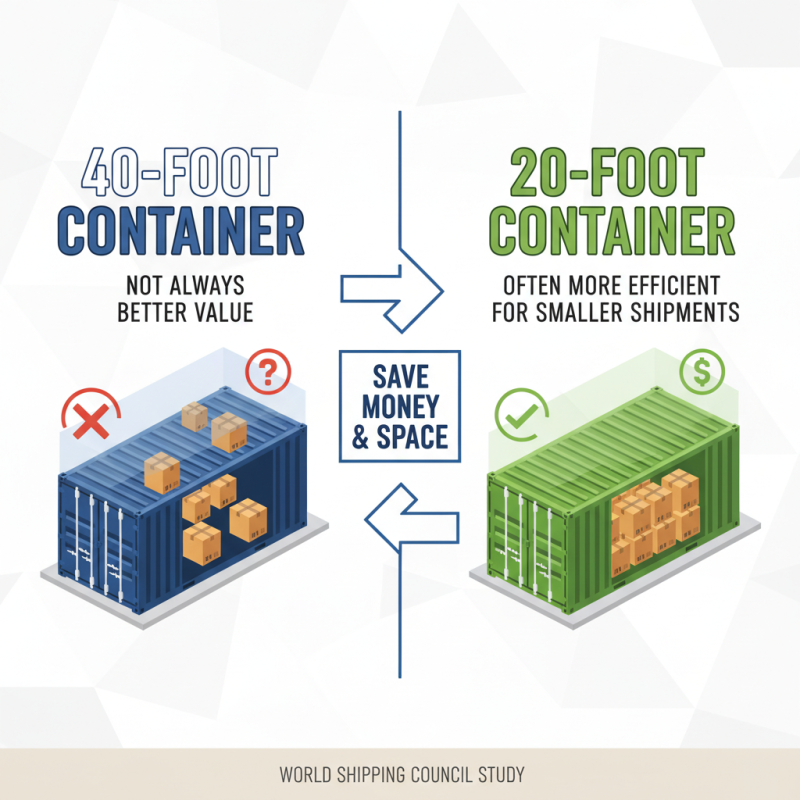
When considering shipping container sizes, many individuals fall prey to common misconceptions about container capacities. One prevalent belief is that larger containers always provide better value for money. However, a study by the World Shipping Council indicates that a 40-foot container may not necessarily maximize space efficiency for smaller shipments. In many cases, a 20-foot container could be more suitable, resulting in lower costs and reduced wasted space.
Tips: Evaluate your specific shipping needs carefully before committing to a container size. Analyze your inventory, taking into account dimensions and weight to avoid overpaying for unused capacity.
Another misconception is that all shipping containers are created equal in terms of usable space. According to the ISO, standard containers have internal dimensions that can significantly differ from their exterior measurements. For instance, while a standard 40-foot container has an external length of 40 feet, the internal usable space is about 39.5 feet, which can affect loading strategies.
Tips: Always measure your cargo and consider potential packing methods to ensure it fits comfortably within the chosen container. Research container modifications if your items are irregularly shaped or require specialized handling.