China Top Steel Containers for Storage Manufacturers?
Choosing China’s top steel containers for storage manufacturers requires more than comparing catalog photos. In practice, a reliable supplier shows production details, test records, and consistent dimensions. Buyers should examine steel grade, coating thickness, weld quality, door alignment, and drainage design. A container may look strong outside yet fail through weak hinges or uneven floor support. Small details matter.
This guide introduces leading Chinese manufacturers and explains how to assess their capabilities. It considers factory experience, fabrication equipment, quality-control procedures, customization support, and export service. Evidence should include material certificates, inspection reports, sample approvals, and clear warranty terms. When possible, request a factory video audit or independent pre-shipment inspection. Numbers deserve checking. Published load ratings may change with design, flooring, ventilation, and local requirements.
The best choice depends on use, climate, site access, and expected service life. A dry warehouse needs different protection from a coastal yard exposed to salt air and rain. Ask about galvanizing, paint systems, corrosion resistance, stacking limits, and spare-part availability. Confirm dimensions before transport; a few centimeters can affect placement. Compliance must be verified for the destination market and intended application. This overview supports practical, informed decisions rather than an absolute ranking. Manufacturers change, and promotional claims can be incomplete. Compare evidence carefully, consult technical representatives, and record every specification before ordering. Good sourcing is cautious.
Define Evaluation Criteria: ISO 668, ISO 1496, CSC, and Factory Audits
China Top Steel Containers for Storage Manufacturers?
A reliable evaluation starts with standards, not catalog photos. ISO 668 defines essential container dimensions, corner fittings, and size classifications. ISO 1496-1 sets structural and testing requirements for general-purpose freight containers. Check the certificate against the exact model, not a similar product. The UNCTAD Review of Maritime Transport 2023 recorded about 12.3 billion tons of seaborne trade in 2022. That scale makes dimensional compatibility and handling safety practical concerns, even for stationary storage.
The CSC safety approval plate confirms that a container passed required structural safety checks. Inspect its approval number, maximum gross mass, stacking test value, and inspection dates. Factory audits should review welding procedures, steel traceability, floor loading, door alignment, coating thickness, and leak testing. Ask for calibrated equipment records and production samples. A serious auditor should walk the line. Paperwork alone can mislead. Reports from the International Organization for Standardization also stress controlled testing and documented conformity, yet some audits still rely too heavily on photographs. That weakness deserves attention.
Tips: Measure the delivered unit. Confirm corner casting positions. Request ISO 668 and ISO 1496 test evidence for the purchased configuration. Compare the CSC plate with shipping documents. Check weld seams around doors and roof rails after rain. Keep serial numbers, inspection images, and corrective-action records. Factory quality can vary between batches, so one successful inspection should not represent every future shipment.
China Top Steel Containers for Storage Manufacturers? Define Evaluation Criteria
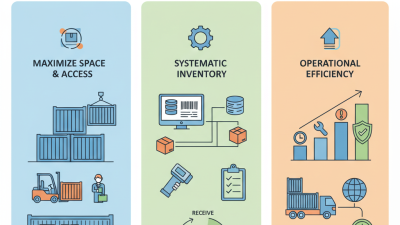
How to use this chart: ISO 668 defines standardized container dimensions, including nominal external lengths for common 20-foot and 40-foot units. ISO 1496-1 is used to verify general-purpose container design, strength, and testing requirements. CSC verification confirms that a container meets international safety requirements, while a factory audit evaluates welding quality, material traceability, production controls, and inspection records.
Compare Chinese Manufacturers by Corten Steel, Welding, Coatings, and QC
China’s storage-container manufacturers should be compared beyond price. World Steel Association’s World Steel in Figures 2024 reports 1,892 million tonnes of crude steel production in 2023. That scale matters, but steel origin alone proves little. Ask for Corten steel mill certificates, heat-number traceability, and chemical results. Weathering steel can resist atmospheric corrosion, yet constant humidity or salt exposure may still cause premature rusting. I learned this the hard way: a strong material can fail in the wrong environment.
Welding quality separates reliable factories from visual imitators. Request approved welding procedures, welder qualifications, and non-destructive testing records. Check corner seams, door frames, and floor joints closely. Small undercuts can become leaks. Coating control also deserves measurable evidence. ISO 12944 provides a useful framework for corrosivity selection, while dry-film thickness should be recorded at multiple points, not guessed from appearance. A glossy surface can hide poor preparation.
Tips:
Request a sample inspection report before ordering. Confirm blast-cleaning standards, coating thickness, adhesion testing, and water-tightness checks. Compare inspection photos with independent test results. ISO 9001 certification helps, but it does not replace production audits. I would also inspect dimensional tolerances and door compression seals. This step feels slow. It prevents expensive surprises. Manufacturers that welcome third-party inspection usually show stronger process discipline, although this is not absolute proof.
Match Container Types: 20-ft (33.2 m³) and 40-ft (67.7 m³) Storage Units
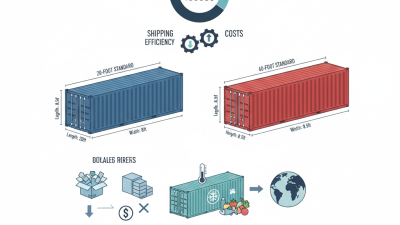
A 20-ft steel storage unit offers about 33.2 m³ of interior volume, making it practical for tools, boxed stock, and compact equipment. Its shorter footprint can fit tighter sites and is easier to position beside a workshop. Measure the largest item before choosing. Door width and height matter as much as floor space, especially for pallets or bulky machinery. Keep heavier loads low and distribute them across the floor to reduce uneven stress.
A 40-ft unit provides about 67.7 m³, roughly double the listed capacity, and suits larger inventories or long materials. It needs more room for delivery, access, and safe loading. That part is easy to overlook. These figures describe nominal storage volume; usable space may vary with internal dimensions, fittings, and any added insulation. Leave a clear path to the doors, and allow room for air circulation if stored goods need it. A quick site measurement and a simple loading plan can prevent an expensive mismatch. Even then, estimates are imperfect: irregular items can waste more space than expected.
China Top Steel Containers for Storage Manufacturers? - Match Container Types: 20-ft (33.2 m³) and 40-ft (67.7 m³) Storage Units
| Comparison Dimension |
20-ft Steel Storage Unit |
40-ft Steel Storage Unit |
| Nominal capacity |
33.2 m³ |
67.7 m³ |
| Typical external dimensions |
About 6.06 m long × 2.44 m wide × 2.59 m high |
About 12.19 m long × 2.44 m wide × 2.59 m high |
| Typical internal dimensions |
About 5.90 m long × 2.35 m wide × 2.39 m high |
About 12.03 m long × 2.35 m wide × 2.39 m high |
| Typical door opening |
About 2.34 m wide × 2.28 m high |
About 2.34 m wide × 2.28 m high |
| Approximate floor area |
About 13.9 m² |
About 28.3 m² |
| Suitable storage applications |
Tools, packaged materials, workshop equipment, and smaller inventory lots |
Bulkier equipment, larger inventory lots, and storage requiring more floor space |
| Site-space requirement |
Shorter footprint; generally easier to place on a restricted site |
Approximately twice the length of a 20-ft unit; requires a longer level placement area |
| Access and loading |
End doors provide access; plan clear space in front for loading and door operation |
End doors provide access; the longer interior may benefit from organized aisles and load planning |
| Selection consideration |
Choose when the storage volume and available placement space are limited |
Choose when additional volume and floor length are priorities |
Dimensions and capacities are typical reference figures for standard dry steel containers. Actual internal dimensions, usable capacity, payload, and tare weight vary by container design, manufacturer, and condition; confirm the unit specification before purchase or placement.
Verify Procurement: Certifications, Production Capacity, Warranty, and Service
China Top Steel Containers for Storage Manufacturers?
Procurement should begin with evidence, not catalogue photos. The World Steel Association reported 1,019.1 million tonnes of crude steel production in China during 2023. That scale suggests strong material availability, but it does not prove consistent container quality. Request current ISO 9001 certificates, welding-quality records, and product-specific test reports. For units used in transport, verify compliance with ISO 668 and ISO 1496 requirements. Check certificate numbers, issuing bodies, expiry dates, and stated production sites. A certificate is not proof of every batch.
Production capacity needs physical verification.
Ask for monthly output, welding equipment lists, inspection stages, and recent delivery records. Compare declared capacity with factory staffing and storage space. The World Steel Association’s World Steel in Figures 2024 confirms China’s dominant steel output, yet raw material access is only one procurement factor. Inspect weld seams, door alignment, floor loading, drainage, and coating thickness on a sample unit. Small details matter.
Warranty language often hides risk.
Require written coverage for structural failure, corrosion, coating defects, and replacement parts. Clarify exclusions, claim evidence, response times, and transport responsibilities. A two-year warranty may be weak if corrosion claims require difficult laboratory proof. Service quality should include engineering drawings, installation guidance, spare-part availability, and a named technical contact. Do not rely only on factory videos. Independent inspection is imperfect and costs more, but it can expose problems before payment.