


What Is a Walkie Pallet Jack and How Does It Work?
A Walkie Pallet Jack is a powered material-handling tool designed to move palletized loads across warehouse floors. The operator walks behind or beside the machine and uses a handle to steer, lift, and travel. Its electric drive reduces the pushing and pulling required with a manual pallet jack. It is commonly used in stockrooms, loading areas, and retail backrooms where loads travel short distances. Compact size helps in narrow aisles. It is not a forklift, though, and it is not suited to every load or surface.
The machine works through a few connected systems. Forks slide beneath a pallet, and an electric lift mechanism raises the load enough to move it. A motor drives the wheels, while the tiller handle controls direction and travel. Exact controls, rated capacity, and braking behavior vary by model, so the manufacturer’s instructions matter. Simple, at first glance. But that simplicity can invite overconfidence. Operators still need to check pallet condition, load stability, floor clearance, and the route ahead. Battery charge and regular maintenance also affect reliable operation. This guide explains the main components, operating sequence, common applications, and practical limits of a Walkie Pallet Jack, with attention to details that can be easy to overlook during a busy shift.
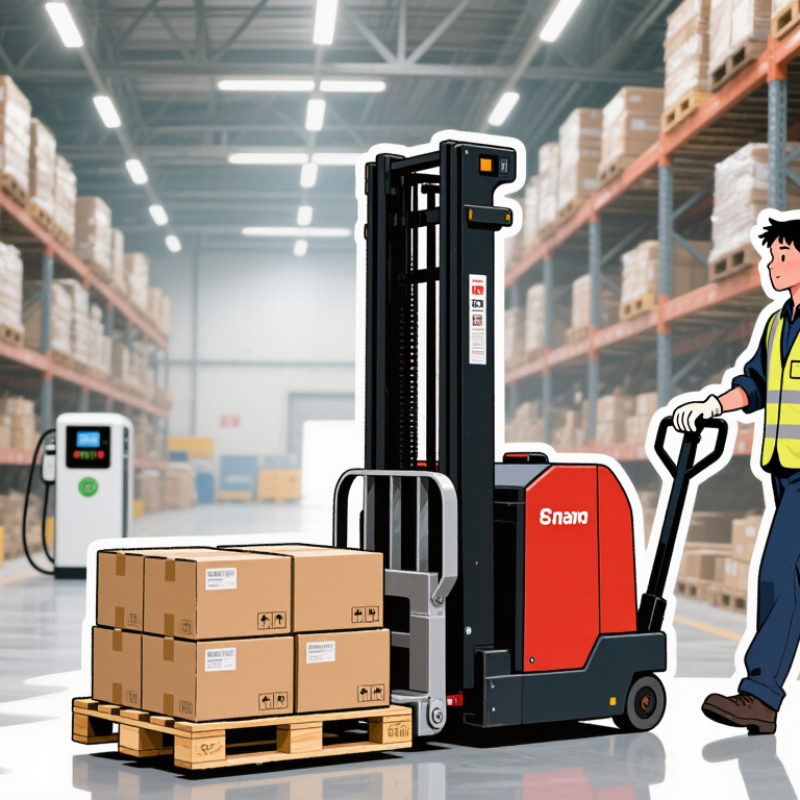
What a Walkie Pallet Jack Is
A walkie pallet jack is a powered tool for moving palletized goods across a warehouse, loading area, or stockroom. The operator walks behind or beside it instead of riding on the machine. Its two forks slide into the pallet openings, while small wheels support the load. A control handle, often called a tiller, helps steer and operate the jack. Compact and practical.
Most models use an electric motor to move the jack and raise or lower its forks. The operator guides it at walking pace, then positions the forks beneath a pallet. A stable load and clear travel path matter; even a short move can feel awkward in a tight aisle. This equipment is intended for moving loads, not lifting them to high storage levels. Capacity and controls vary by model, so the equipment label and manual are useful references.
Tips: Check that the pallet is undamaged and the load sits evenly before moving. Keep the forks low while travelling, and slow down near corners or people. Leave room to turn. One detail that is easy to overlook: uneven floors can make a loaded jack harder to control, so inspect the route as well as the pallet.
Key Components and Their Functions
A walkie pallet jack moves loads with an operator walking beside it. Its forks slide beneath a pallet, while small load wheels support the fork tips and help them roll. The drive wheel provides traction and steering. On smooth warehouse floors, these parts can seem simple; uneven joints may make the load feel less predictable.
The tiller handle combines steering with travel controls. Pressing its buttons signals the electric motor, which turns the drive wheel. A battery supplies power, and a controller regulates how that power reaches the motor. The same handle usually operates the lift and lower functions. A hydraulic pump sends fluid to a cylinder, raising the forks; releasing pressure lowers them. Slowly, not abruptly.
Braking may be electrical or mechanical, depending on the design. Many units also include an emergency reverse switch on the tiller head, which can stop the jack from pinning an operator against an obstacle. That safeguard is not a substitute for clear space. Before use, check the battery charge, controls, wheels, and hydraulic area for leaks. Small damage matters. A worn load wheel can cause vibration, yet it is easy to overlook during a quick inspection.
How Its Lifting and Drive Systems Work
A walkie pallet jack moves loads with an electric drive motor and lifts them through a hydraulic system. The operator walks behind it, steering with a tiller handle. Small controls on the handle command travel, braking, and lifting. A twist of the throttle moves the machine; pressing the lift control starts the pump.
Here’s the mechanical detail. An electric motor drives a hydraulic pump, which sends oil into a cylinder. The rising piston lifts the forks and the pallet above the floor. Lowering opens a release valve, letting the forks descend under load. The process feels simple, but a damaged seal or low battery can make lifting uneven. That deserves attention.
The Industrial Truck Association’s classification guide lists seven powered industrial truck classes; walkie pallet jacks generally fall within Class III, electric motor hand trucks. OSHA’s powered industrial truck standard requires equipment inspections at least daily, or after each shift when used around the clock. Check the forks, wheels, tiller, controls, and battery before work. A pallet may look stable while its weight is poorly distributed, so move slowly and keep the load low. Small details matter.
How to Operate a Walkie Pallet Jack
A walkie pallet jack is a powered truck controlled by an operator walking beside it.
Before moving, inspect the forks, wheels, controls, and battery. Check for cracks, leaks, or a tiller that sticks. Confirm the load is stable and within the capacity shown on the equipment plate. Small faults matter.
Slide the forks fully beneath the pallet, then raise it just enough to clear the floor. Keep the load low while travelling. Use the tiller controls gently, move at walking speed, and keep a clear view of the route.
Slow down near corners, doorways, and people. Never turn on a ramp; avoid slopes unless the equipment is designed for them. When visibility is blocked, stop and get help rather than guessing.
OSHA estimates that forklifts cause about 85 fatal accidents and 34,900 serious injuries annually; these figures cover forklifts broadly, not walkie pallet jacks alone. OSHA’s powered industrial truck standard requires operator training and evaluation before workplace use.
Follow the specific operating manual, since controls and handling can vary. At the end, park on level ground, lower the forks fully, and switch off the truck.
I still find rushed pre-use checks tempting on quiet shifts. That is exactly when a loose wheel can go unnoticed.
Common Uses and Essential Safety Practices
A walkie pallet jack is useful for moving palletized goods through warehouses, stockrooms, and loading areas. The operator walks behind it and steers with a handle that controls travel and lifting. Its compact size helps in narrow aisles, though tight spaces still require slow, deliberate turns. It can move cartons from a receiving dock to storage or bring materials to a packing station. Small movements matter. Keep the load balanced and within the machine’s rated capacity; a leaning pallet can shift unexpectedly.
Safety begins before the first lift. Check the forks, wheels, controls, horn, and battery for visible damage, and report problems before use. Slide the forks fully under the pallet, raise the load only enough to clear the floor, and keep the route free of debris. Walk at a controlled pace, sound the horn where sightlines are blocked, and give pedestrians room. Avoid sharp turns, especially with a raised or unstable load. On ramps, follow the equipment manual and site procedures rather than improvising. One easy detail to overlook is the floor itself: a loose strap or wet patch can change how the jack handles. Familiar routes deserve attention too. A rushed turn can feel harmless, until the load starts to move.
Walkie Pallet Jack Capacity Ranges
Typical rated-load ranges vary by equipment design. Always check the capacity plate on the specific truck and never exceed its rating.
These ranges are general examples, not specifications for every model. A walkie pallet jack is powered and controlled by an operator walking behind or beside it; some walkie rider models include a platform.