


How to Choose a 20 ft Cargo Container in 2026?
Choosing a 20 ft cargo container in 2026 requires more than comparing prices online. It demands practical judgment, verified specifications, and a clear understanding of the intended cargo.
Global container demand remains closely tied to trade growth and supply-chain reliability. UNCTAD’s Review of Maritime Transport 2024 reported that maritime trade was expected to grow in 2024, while continued route disruptions increased pressure on equipment availability and freight planning. These conditions can affect delivery times, leasing costs, and container quality. A low-priced unit may not be the best value.
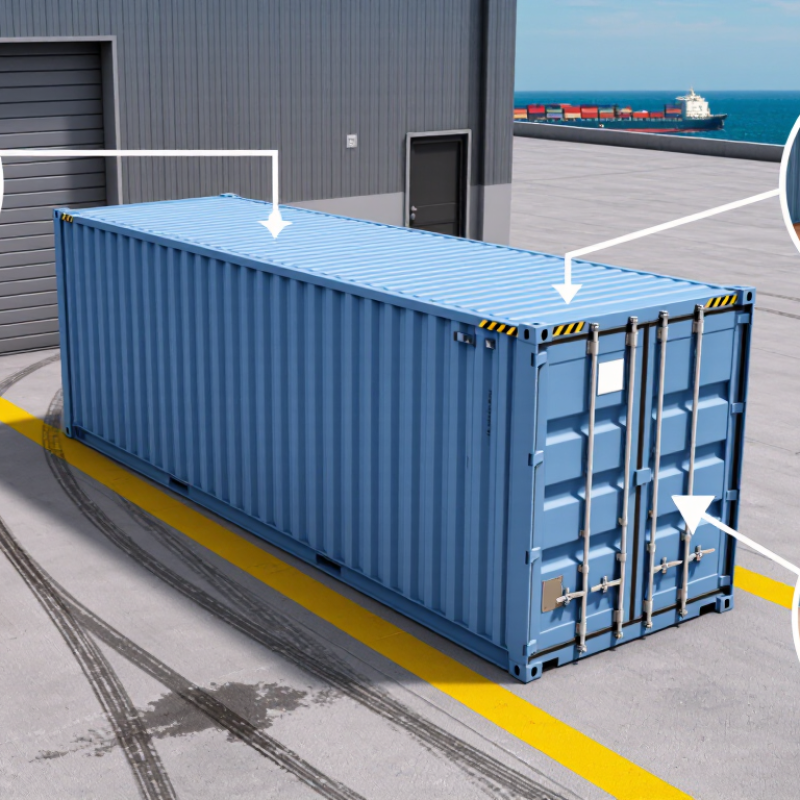
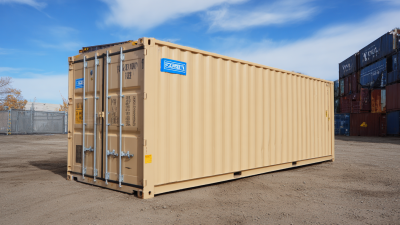
A standard 20 ft cargo container usually measures about 6.06 meters long, 2.44 meters wide, and 2.59 meters high externally. Its usable capacity is commonly near 33 cubic meters, but internal dimensions vary by manufacturer and design. Payload limits also depend on the container’s structural rating, transport regulations, and the carrier’s requirements. Check the door opening, floor condition, roof corrosion, locking bars, and the CSC safety plate before purchase.
ISO 668 provides a useful reference for standard container dimensions and classifications. The World Bank’s Logistics Performance Index also shows why handling quality, tracking, and dependable transport partners matter beyond the box itself. Yet specifications alone do not guarantee performance. This is where many buyers hesitate too late.
Consider a palletized load, a narrow warehouse entrance, or a humid coastal storage site. Those details can change the right choice. New, cargo-worthy, and used containers serve different budgets and risk levels. Inspect photographs carefully, request current inspection records, and confirm delivery costs in writing. A careful decision may feel slower, but replacing a damaged container is usually more expensive. The perfect container does not exist. The suitable one does.
Define Your Cargo Needs and Container Specifications
How to Choose a 20 ft Cargo Container in 2026?
Define your cargo before comparing containers. List the cargo type, total weight, package sizes, loading method, and shipping route. A 20 ft container usually suits dense, heavy cargo better than bulky goods. Measure each pallet, crate, or machine carefully. Leave space for doors, corner posts, and safe handling. Do not trust estimates copied from an old spreadsheet.
Check the container’s internal dimensions and maximum payload on its certification plate. Actual capacity can vary with construction, flooring, and repairs. Confirm that your forklift can enter safely and that pallets can pass through the doorway. Think about the floor condition. A damaged floor may affect both loading safety and cargo stability. Door seals should close evenly, without visible gaps or hardened rubber.
Cargo conditions also shape the specification. Dry goods may need ventilation to reduce condensation. Sensitive equipment may require clean interiors, moisture control, or extra securing points. I once underestimated the space needed for protective padding, and the final loading plan became awkward. That mistake was avoidable. Ask for recent inspection photos, repair records, and clear measurements before booking. A plain container can work well, but only when its condition matches the cargo. Check local transport and handling requirements before use.
How to Choose a 20 ft Cargo Container in 2026? — Define Your Cargo Needs and Container Specifications
| Decision Dimension | Typical Data or Requirement | Why It Matters | Recommended Selection Guidance | Verification Before Purchase or Loading |
|---|---|---|---|---|
| Container Type | 20 ft standard dry container Enclosed, weather-resistant cargo space for general freight |
It is the most versatile format for boxed goods, pallets, machinery, furniture, and non-temperature-sensitive cargo. | Choose this type when the cargo does not require active temperature control, top loading, or unusually wide access. | Confirm the container is watertight, structurally sound, and suitable for the intended cargo. |
| External Dimensions | Approximately 6.058 m long × 2.438 m wide × 2.591 m high Approximately 19 ft 10 in × 8 ft × 8 ft 6 in |
External dimensions affect road clearance, terminal handling, stacking, and available storage space. | Allow additional space for doors, corner castings, lifting equipment, and safe access around the unit. | Measure the actual unit because manufacturing tolerances and repairs can cause minor dimensional differences. |
| Internal Dimensions | Approximately 5.898 m long × 2.352 m wide × 2.393 m high Approximately 19 ft 4 in × 7 ft 9 in × 7 ft 10 in |
Internal dimensions determine whether the cargo, packaging, pallets, and bracing will fit. | Plan the loading pattern before booking. Include clearance for doors, ventilation, dunnage, and cargo movement. | Use actual internal measurements when the cargo is close to the maximum length, width, or height. |
| Door Opening | Approximately 2.340 m wide × 2.280 m high Approximately 7 ft 8 in × 7 ft 6 in |
A cargo item can fit inside the container but still fail to pass through the door. | Check the largest packed item, pallet height, forklift access, and required turning clearance. | Measure the packed cargo, not only the product itself. Include skids, cartons, protective frames, and wrapping. |
| Internal Volume | Approximately 33.2 m³ Approximately 1,172 ft³ |
Volume is important for lightweight, high-volume goods such as cartons, textiles, and household products. | Use a loading plan or three-dimensional packing calculation instead of relying on nominal volume alone. | Deduct space for pallets, blocking, bracing, irregular shapes, and required air circulation. |
| Typical Tare Weight | Approximately 2,200–2,400 kg Approximately 4,850–5,290 lb |
Tare weight is the empty container weight and is included in the maximum gross weight. | Use the actual tare weight shown on the container safety plate and shipping documents. | Do not estimate tare weight for regulated transport, weighing, or cargo planning. |
| Maximum Gross Weight | Common ISO rating: 30,480 kg Approximately 67,200 lb, including container and cargo |
The gross limit protects the container, lifting equipment, chassis, road infrastructure, and handling personnel. | Calculate: cargo weight + packaging + pallets + dunnage + container tare weight. | The lower limit may be imposed by local road regulations, a chassis, a vessel, a terminal, or the specific container. |
| Practical Cargo Payload | Often approximately 26,000–28,000 kg, depending on tare weight and applicable limits | Real-world payload is usually lower than the nominal gross rating because the container itself has weight. | For dense cargo, prioritize verified weight, axle distribution, and legal road limits over available cubic volume. | Confirm the payload from the door plate, carrier rules, route regulations, and weighing requirements. |
| Volume-Limited Cargo | Examples: cartons, garments, furniture, plastic products, and lightweight consumer goods | These goods may fill the container before reaching the weight limit. | Optimize carton dimensions, pallet arrangement, stackability, and unused vertical space. | Prepare a carton or pallet count showing dimensions, quantity, orientation, and total cubic volume. |
| Weight-Limited Cargo | Examples: metal parts, stone products, machinery, ceramics, paper rolls, and dense raw materials | Dense cargo can reach the legal weight limit while leaving substantial unused volume. | Use evenly distributed loads and place heavy items low and near the container’s longitudinal center where practical. | Check floor load limits, forklift axle loads, blocking, bracing, and permissible road axle weights. |
| Pallet Compatibility | Internal width: approximately 2.352 m; internal length: approximately 5.898 m | Pallet dimensions and orientation determine how much floor area is usable. | Model the exact pallet footprint. Avoid assuming that every pallet type will create a fully efficient layout. | Include pallet overhang, corner protection, tie-down access, and forklift clearance. |
| Cargo Height | Standard internal height: approximately 2.393 m | Door height is lower than internal height and may restrict tall cargo or stacked pallets. | Choose a standard 20 ft container when the packed height comfortably fits below the door opening. | Measure the highest point of the loaded unit, including covers, skids, lifting eyes, and protective packaging. |
| High-Cube Alternative | 20 ft high-cube units are approximately 2.896 m high externally and may provide about 37–38 m³ of internal volume | The additional height can help with tall or low-density cargo but may affect availability, handling, and transport clearance. | Consider a 20 ft high-cube unit when vertical capacity is more important than standard height compatibility. | Confirm route height restrictions, terminal acceptance, actual door height, and the container’s safety plate. |
| Temperature Requirement | Standard dry containers do not actively control temperature. | Temperature-sensitive products can be damaged by heat, freezing, condensation, or prolonged transit. | Use a temperature-controlled solution when the cargo requires a defined temperature range, humidity control, or continuous monitoring. | Document the required temperature range, monitoring method, power availability, and backup procedures. |
| Moisture and Ventilation | Dry containers are generally enclosed and include passive ventilation features. | Condensation can form when cargo moisture, temperature changes, and poor ventilation combine. | Use dry, moisture-safe packaging; add desiccants or ventilation measures when appropriate for the cargo. | Inspect for leaks, standing water, damp flooring, blocked vents, odor, and previous-cargo residue. |
| Floor Condition | Most dry containers use a heavy-duty wooden floor over a steel understructure. | Damaged or contaminated flooring can reduce safe payload, cause cargo damage, or create compliance issues. | Verify that the floor is dry, level, clean, free from major damage, and suitable for the intended point loads. | Check for soft areas, protruding fasteners, oil, chemicals, pests, and excessive wear. |
| Cargo Securing | Use blocking, bracing, straps, anti-slip material, edge protection, and rated lashing points where required. | Unsecured cargo can shift during acceleration, braking, vessel movement, or lifting. | Design the securing method according to cargo mass, center of gravity, fragility, and transport mode. | Confirm that securing materials are rated, correctly positioned, and not damaging the container or cargo. |
| Compliance and Identification | The container should display a valid safety approval plate and a readable identification number. | Identification and safety information support inspection, handling, tracking, and international transport compliance. | Do not use a unit with missing, altered, or unreadable safety information for regulated transport. | Match the container number, safety plate, shipping documents, inspection records, and booking information. |
| Final Selection Rule | Choose based on cargo dimensions, cargo weight, volume, loading method, route, climate, and compliance requirements. | A container that fits by volume may still fail because of weight, door access, floor loading, or transport restrictions. | Use a 20 ft standard dry container for general cargo that fits within its verified dimensions and legal weight limits. | Approve the selection only after completing a dimensional packing plan, weight calculation, condition inspection, and route check. |
Related Posts
-
Essential Tips for Buying a 20 ft Cargo Container?
-
2026 Best 20 ft Sea Container Prices for Global Buyers
-
How to Buy a 20 ft Shipping Container in 2026?
-

2026 Top Guide to Sourcing 20ft Containers Worldwide?
-
2025 Top 5 Reasons Why 20 Ft Cargo Containers are Essential for Businesses and Shipping Industry Growth
-
How to Choose the Best 20 Ft Cargo Container for Your Needs?