


Top 10 Types of 40 ft Shipping Containers
Choosing the right 40 ft shipping container is rarely as simple as comparing length and price. Cargo weight, loading equipment, ventilation, temperature, and destination conditions all matter. A container carrying furniture may need different features from one transporting machinery, food-grade materials, or oversized equipment.
Lars Jensen, an independent container-shipping analyst and industry commentator, has said, “The container is not just a box; it is part of the cargo’s supply chain.” That practical view guides this overview. A 40 ft shipping container can be standard, high cube, refrigerated, open top, flat rack, tank, or specially modified. Each type solves a different operational problem. Small differences can become expensive at a busy terminal.
The following guide examines ten common types and explains where each one performs best. It considers internal height, door design, payload limits, insulation, airflow, and handling requirements. A high cube model may provide valuable extra space, while a reefer requires power and careful temperature monitoring. An open-top unit can simplify crane loading, but it may expose cargo to weather during handling. Details matter.
The categories are not always perfectly clean. Some containers are customized. Others are marketed differently by suppliers. That deserves attention. Specifications should be checked against the manufacturer’s plate, inspection records, and current shipping-line requirements. Real-world experience also matters: a container that looks suitable on paper may fail when forklifts, ramps, or uneven cargo enter the picture. This guide offers a dependable starting point, not a substitute for professional cargo planning.
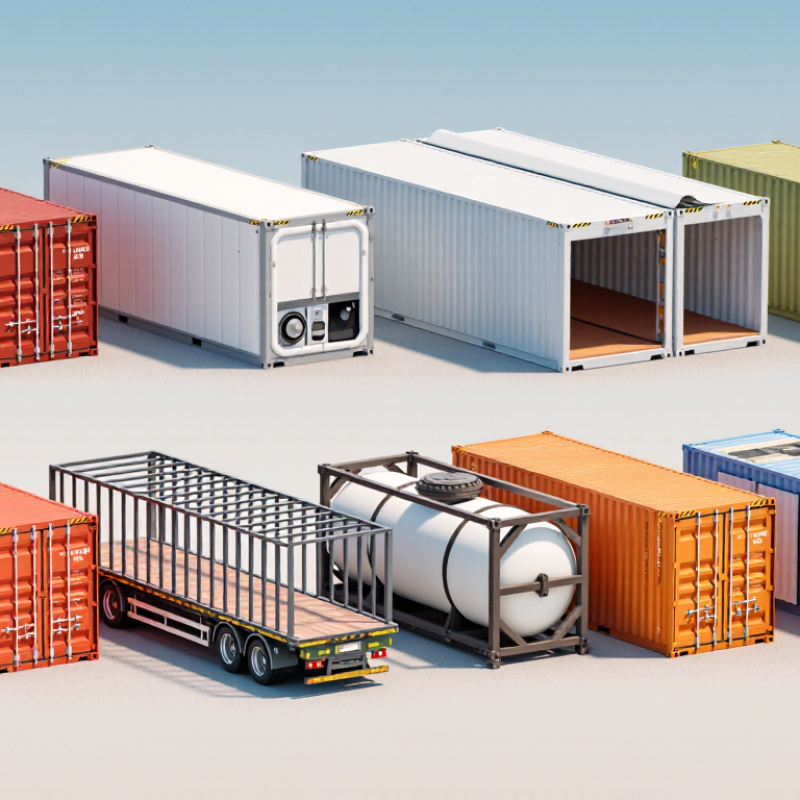
Standard 40-Foot Containers: Design, Capacity, and Everyday Applications
A standard 40-foot shipping container is built for predictable handling, stacking, and repeated ocean transport. ISO 668:2020 sets its external length at 12.192 meters and width at 2.438 meters. Its external height is usually 2.591 meters. Inside, usable space is about 67 cubic meters, depending on wall thickness and flooring.
It holds twice the volume of a 20-foot equivalent unit, or 2 TEU. Industry fleet data from Drewry’s Container Census 2024 shows that standard dry containers remain the dominant equipment type worldwide. A typical unit can carry roughly 26 to 28 metric tonnes, but payload limits vary by tare weight, road rules, and handling equipment. Boxes, furniture, packaged machinery, and retail inventory fit well. Long cargo benefits from the uninterrupted floor length.
The numbers can mislead. A full 67 cubic meters is rarely practical. Irregular cartons create empty pockets, while axle limits may stop a box before it reaches its theoretical payload. I have seen loading plans fail because teams measured products, not door clearance. Standard doors usually provide about 2.34 meters of width and 2.28 meters of height.
Tips: Leave breathing room near the doors. Check pallet dimensions, floor loading, and cargo height before booking. Record the container’s tare weight from its safety plate. A simple trial layout often prevents expensive reshuffling. Think twice about dense cargo; volume may remain unused, but weight limits arrive quickly.
Top 10 Types of 40 ft Shipping Containers - Standard 40-Foot Containers: Design, Capacity, and Everyday Applications
| Container Type | Design and Main Features | Typical External Dimensions (L × W × H) |
Approximate Internal Dimensions (L × W × H) |
Internal Volume | Typical Tare Weight | Typical Maximum Payload | Everyday Applications |
|---|---|---|---|---|---|---|---|
| 40 ft Standard Dry Container | Fully enclosed steel or aluminum cargo box with rear-opening doors; suitable for general dry freight. | 12.19 × 2.44 × 2.59 m 40 × 8 × 8 ft 6 in |
12.03 × 2.35 × 2.39 m | About 67.7 m³ 2,390 ft³ |
3,600–4,000 kg | About 26,500–28,900 kg | Packaged goods, furniture, machinery parts, textiles, retail merchandise, and household relocations. |
| 40 ft High Cube Dry Container | General-purpose dry container with approximately 30 cm more interior height than a standard-height unit. | 12.19 × 2.44 × 2.90 m 40 × 8 × 9 ft 6 in |
12.03 × 2.35 × 2.70 m | About 76.3 m³ 2,700 ft³ |
3,800–4,300 kg | About 26,000–28,600 kg | Lightweight, high-volume cargo such as furniture, insulation, packaging materials, appliances, and consumer products. |
| 40 ft Refrigerated Container | Insulated container with an integrated refrigeration unit for temperature-controlled cargo; requires an external power supply. | 12.19 × 2.44 × 2.59 m Standard height |
About 11.56 × 2.29 × 2.26 m | About 60 m³ 2,120 ft³ |
4,500–5,000 kg | About 25,000–27,000 kg | Frozen food, fresh produce, meat, seafood, pharmaceuticals, flowers, and temperature-sensitive chemicals. |
| 40 ft High Cube Refrigerated Container | High-cube insulated reefer with additional internal height and active temperature control. | 12.19 × 2.44 × 2.90 m 40 × 8 × 9 ft 6 in |
About 11.58 × 2.29 × 2.54 m | About 67 m³ 2,365 ft³ |
4,800–5,300 kg | About 24,500–26,500 kg | High-volume chilled or frozen cargo, including produce, beverages, prepared foods, and medical supplies. |
| 40 ft Open Top Container | Removable roof or flexible top cover allows cargo to be loaded from above; doors usually open at one end. | 12.19 × 2.44 × 2.59 m Typical standard height |
About 12.03 × 2.35 × 2.35 m | About 66–67 m³ | 3,800–4,500 kg | About 26,000–28,000 kg | Scrap metal, timber, stone, construction equipment, industrial components, and cargo that exceeds door height. |
| 40 ft Flat Rack Container | Heavy-duty platform with fixed or collapsible end walls and no side walls or roof, enabling over-width loading. | 12.19 × 2.44 m Height varies by design |
Cargo space is open; usable width is typically about 2.40 m |
Not applicable as an enclosed cube | About 5,000–6,000 kg | About 39,000–45,000 kg | Heavy machinery, vehicles, boilers, transformers, steel structures, pipes, and oversized project cargo. |
| 40 ft Platform Container | Reinforced flat base without side walls or end walls; designed for concentrated or exceptionally oversized loads. | 12.19 × 2.44 m Platform height varies |
Open platform; no enclosed internal dimensions |
Not applicable as an enclosed cube | About 5,500–6,500 kg | About 40,000–50,000 kg | Large industrial equipment, tanks, construction modules, long steel products, and project cargo requiring special securing. |
| 40 ft Tank Container | Cylindrical tank mounted inside a standardized frame; equipped with valves, safety fittings, and protective frame structure. | 12.19 × 2.44 × 2.59 m Frame envelope |
Tank dimensions vary; frame-mounted configuration |
Typically 25,000–26,000 L | About 3,500–5,000 kg | Usually 25,000–30,000 kg subject to regulations |
Bulk liquids, food-grade products, non-hazardous chemicals, fuels, and certain regulated dangerous goods. |
| 40 ft Side-Opening Container | Dry container fitted with large side doors, often along one or both long sides, for wide access to the cargo area. | 12.19 × 2.44 × 2.59 m or high-cube height |
About 12.03 × 2.35 × 2.39 m height depends on model |
About 67–76 m³ | 4,000–5,000 kg | About 25,500–28,000 kg | Event equipment, motorcycles, palletized goods, retail displays, building materials, and cargo needing forklift access from the side. |
| 40 ft Double-Door Container | Doors at both ends provide two-way access, simplifying loading, unloading, sorting, and stock rotation. | 12.19 × 2.44 × 2.59 m or high-cube height |
About 12.03 × 2.35 × 2.39 m height depends on model |
About 67–76 m³ | 3,800–4,500 kg | About 26,000–28,500 kg | Warehouse overflow, construction-site storage, cross-docking, sequential loading, and goods requiring frequent access. |
| 40 ft Pallet-Wide Container | Extra internal width compared with a conventional container, allowing more efficient placement of standard European pallets. | About 12.19 × 2.50 × 2.90 m high-cube format |
About 12.10 × 2.44 × 2.70 m | About 79–80 m³ | 4,000–4,500 kg | About 26,000–28,000 kg | European palletized freight, beverages, packaged foods, automotive components, and distribution-center shipments. |
Related Posts
-
What Are the 2026 Top 40 ft Container Types and Sizes?
-
What Is the Best 40 ft Shipping Container for Global Buyers?
-
Why Choose a 40 ft Storage Container?
-
What Are the 2026 Top Types of 40 Ft Storage Containers?
-
Top 10 Storage Solutions for Shipping Containers Worldwide?
-

Why Choose Shipping Containers for Your Next Project?