

10 Tips for Choosing Storage for Shipping Containers?
Shipping containers look simple, but storage decisions rarely are. A steel box may sit beside a warehouse, at a depot, or on an exposed construction site. Each location changes its security, drainage, handling, and maintenance requirements. The right storage for shipping containers protects cargo, preserves equipment value, and keeps daily operations moving.
UNCTAD’s Review of Maritime Transport 2024 confirms that maritime shipping carries more than 80% of global merchandise trade by volume. Containerized trade therefore depends on reliable storage between transport stages. The report also highlights continuing disruption, capacity pressure, and changing logistics patterns. These conditions make space planning more important than simply finding the cheapest yard. A low rental price can become expensive after repeated crane moves, water damage, or difficult vehicle access.
Container dimensions matter too. ISO standards commonly guide 20-foot and 40-foot container design, but actual usable space varies with doors, flooring, insulation, and internal fittings. Industry market reports from Container xChange also track changing availability and leasing conditions across major container markets. Those trends can influence purchase timing and repositioning costs, though market averages never describe every local yard accurately.
No checklist is perfect. Weather, ground conditions, theft exposure, and delivery schedules can change quickly. A practical decision should combine published data with an on-site inspection and advice from qualified logistics professionals. The following ten tips examine those details, from drainage and ventilation to access routes, stacking limits, insurance, and long-term maintenance. Small oversights often become visible only after the first heavy rain.
Define Your Shipping Container Storage Requirements
Choosing storage for a shipping container starts with a clear definition of what must be stored.
List the cargo type, total volume, pallet count, weight, and expected storage period. Measure every item, including awkward machinery, protective packaging, and unused gaps. A simple sketch often exposes false capacity assumptions. If goods arrive weekly, note the exact number of truck movements and unloading hours.
Access needs shape the facility more than advertised capacity.
Decide whether you need ground-level access, lifting equipment, lighting, drainage, or covered loading space. Keep frequently used cartons near the doors. Place fragile or temperature-sensitive materials away from heat, moisture, and direct sunlight. Record acceptable temperature and humidity ranges when the cargo requires them. Do not treat “weather-resistant” as fully climate-controlled. That assumption can become expensive.
Security requirements should match the cargo and operating schedule. Define who may enter, how access is logged, and how often inspections occur. Ask about locks, perimeter controls, fire precautions, pest monitoring, and emergency access.
Keep an inventory with photographs, serial numbers, and condition notes. Review handling risks, insurance conditions, and local site requirements before signing.
I have seen teams choose a larger unit too early. Unused space still costs money, while cramped aisles slow every delivery. Recheck your estimates after one busy week. Real operations rarely match the spreadsheet.
Compare Available Storage Locations and Facility Types
10 Tips for Choosing Storage for Shipping Containers
Compare Available Storage Locations and Facility Types
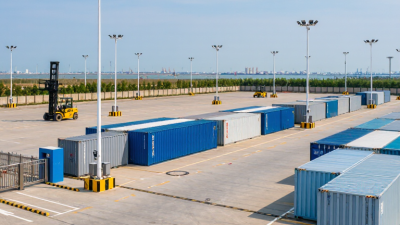
Choosing a storage location starts with the container’s next destination. A port-side yard can reduce transfer time, but daily access fees may be higher. Rail-connected sites suit regular inland movement and reduce some road handling. However, schedules can change, so confirm available loading windows before signing an agreement.
Outdoor yards usually cost less and accommodate large containers easily. They need firm ground, clear drainage, lighting, fencing, and reliable access controls. Indoor facilities offer stronger protection from rain, salt air, and temperature swings. They may limit container height or require appointment-based entry. Shared yards can be flexible, while private compounds provide more control and privacy.
Inspect the site in person. Look for standing water, narrow turning areas, damaged pavement, and poor night visibility. Ask how often staff record container condition and who handles emergencies. A documented inspection process is more dependable than a polished sales promise. Check whether forklifts, cranes, or chassis are available, and confirm their weight limits. I once underestimated turning space at a low-cost yard; every collection became slower and more expensive. That mistake still influences my site checks. Also compare insurance responsibilities, access hours, security monitoring, and notice periods for moving the container. The cheapest location is not always the least costly.
Assess Access, Security, and Site Conditions
Choosing storage for shipping containers starts with access, not price. UNCTAD’s Review of Maritime Transport 2024 notes that over 80% of world merchandise trade by volume moves by sea. Delays grow when trucks cannot turn, gates narrow, or surfaces rut under loaded chassis. Visit during rain. Measure turning radii, gate width, lighting, and queue space. The World Bank’s Logistics Performance Index 2023 collected 4,090 assessments across 139 economies, highlighting the value of logistics visibility. Ask how entry times, photos, and movement records are documented.
Security should be layered, visible, and tested. Look for controlled entry, perimeter fencing, camera coverage, visitor logs, and night lighting. Cameras alone are not security. Check retention periods and who reviews alerts. Confirm seals, locks, and inspection procedures before acceptance. Ask for incident records, response times, and insurance responsibilities in writing. Small gaps matter. A blind corner beside stacked containers deserves more attention than another sign.
Site conditions protect both cargo and equipment. Check drainage after heavy rain, standing water, slopes, potholes, dust, and overhead clearance. Keep containers off unstable ground and leave space for safe inspection. Consider wind exposure and local flood maps, then document seasonal changes. I would not trust a polished yard inspection alone. Return unannounced if possible. The better question is not, “Does it look secure?” but, “What happens at 2 a.m. during rain?”
Evaluate Weather Protection and Container Placement
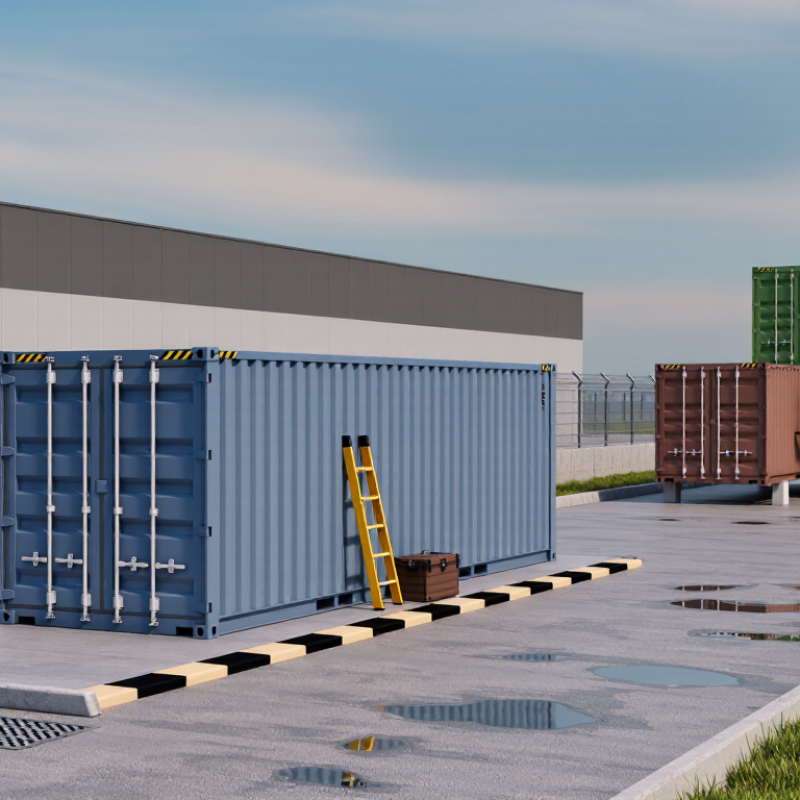
Choosing storage for shipping containers starts with the ground beneath them. Weather protection is not only about a strong roof. Rainwater needs somewhere to go. Inspect the site after heavy rain, not only on a sunny afternoon. Look for standing water, soft soil, falling branches, and wind tunnels between buildings. Use a level, compact surface, and keep drainage paths clear. Elevate the container slightly when local conditions demand it. Small height differences can prevent persistent moisture around the base.
I once placed a container where the entrance stayed dry, but condensation damaged cardboard inside. The problem was poor airflow and an overlooked slope. That mistake changed my inspection routine. Now I check roof seams, door seals, vents, and underside corrosion before loading. Check it twice. Containers need clearance from walls for inspection and airflow. Leave room for safe access, equipment, and emergency movement. Do not place them beneath unstable trees or near loose structures.
Wind exposure also matters. A sheltered position may reduce rain impact, but blocked airflow can trap humidity. Balance both conditions. Placement should match the stored material. Paper goods need dry air, while tools may tolerate cooler temperatures but still resist condensation. Use a simple thermometer and humidity meter inside the unit. Record readings during changing weather. If moisture repeatedly appears, reconsider the location or ventilation plan. Seasonal movement, settling ground, and damaged seals can change performance.
10 Tips for Choosing Storage for Shipping Containers: Weather Protection and Container Placement
The chart ranks ten practical storage considerations on a 1–5 planning-priority scale. Drainage, a level foundation, weather-resistant seals, ventilation, and safe clearance are especially important for reducing water intrusion, condensation, structural stress, and access problems.
Review Pricing, Contracts, and Long-Term Flexibility
Choosing storage for shipping containers requires more than comparing monthly prices. A low rate may exclude handling, security, access, or seasonal fees. Ask for a complete written price sheet before moving a container. Confirm whether charges are calculated by day, month, container size, or occupied space. Small wording differences can affect the final invoice.
Tip 1: Review the contract line by line. Check payment dates, deposit rules, access hours, notice periods, damage responsibilities, and cancellation fees. Request clear terms for rate increases. A practical contract should explain what happens during delays, weather events, or unexpected site closures. Keep photographs of the container and storage area at arrival. They provide useful evidence if condition disputes occur.
Tip 2: Protect long-term flexibility. Avoid agreements that lock you into a lengthy period without reasonable exit options. Ask whether you can extend, reduce, relocate, or remove containers without heavy penalties. A storage plan that works today may fail after six months. I have seen businesses underestimate growth and pay for unused space. That mistake is common. Review the arrangement every quarter, including access performance, invoice accuracy, and security procedures. A slightly higher rate may be worthwhile if it offers reliable access and transparent adjustments. Still, do not assume flexibility is free. Get every promise in writing.
10 Tips for Choosing Storage for Shipping Containers? - Review Pricing, Contracts, and Long-Term Flexibility
| No. | Selection Tip | Key Dimension | Typical Benchmark or Data Point | What to Review | Long-Term Flexibility Check |
|---|---|---|---|---|---|
| 1 | Compare the full monthly cost | Base storage rate and additional fees | Indicative outdoor container storage commonly ranges from about US$50–US$250 per container per month, depending on location, security, access, and demand. | Ask whether handling, entry, exit, administration, inspections, drainage, electricity, tax, and late-payment charges are included. | Request a written all-in rate and a fee schedule for the entire expected storage period. |
| 2 | Match the site to container size | Space requirement and ground capacity | A standard 20-foot container is approximately 6.06 m long, while a 40-foot container is approximately 12.19 m long; both are about 2.44 m wide. | Confirm clearances, turning space, stacking limits, pavement condition, drainage, and whether loaded containers are accepted. | Choose a facility that can accommodate a future change from 20-foot to 40-foot units without relocation penalties. |
| 3 | Evaluate access hours | Retrieval speed and appointment requirements | Facilities may offer scheduled access during business hours, extended access, or 24/7 access. Retrieval notice periods commonly range from same-day to 48 hours. | Check gate hours, weekend access, notice deadlines, truck appointment rules, and emergency-release procedures. | Prefer contracts that allow access-level upgrades or occasional after-hours retrieval without a new long-term agreement. |
| 4 | Review the contract term | Minimum commitment and renewal terms | Common arrangements include month-to-month, three-month, six-month, and annual terms. Longer commitments may provide lower rates but reduce exit flexibility. | Identify the minimum term, automatic renewal period, notice deadline, early termination fee, and rent-review date. | For uncertain demand, negotiate a shorter initial term with an option to extend at a defined rate. |
| 5 | Check rate-increase controls | Price stability during storage | Storage agreements may permit periodic increases, often linked to a stated review date or an inflation index. Uncapped increases create budgeting risk. | Look for the adjustment frequency, notice period, calculation method, maximum increase, and treatment of added services. | Seek a fixed rate for the initial term or a written annual cap, such as a percentage limit agreed in advance. |
| 6 | Verify security and condition controls | Loss, damage, and environmental exposure | A suitable site should provide controlled entry, perimeter security, lighting, drainage, and documented condition checks. Outdoor storage does not eliminate weather-related risk. | Confirm CCTV coverage, access logs, fencing, fire arrangements, flood exposure, pest control, and incident-reporting procedures. | Ensure the contract clearly separates the facility’s liability from the customer’s cargo-insurance responsibility. |
| 7 | Confirm handling capability | Lifting, moving, and loading equipment | Container handling may require reach-stacking equipment, cranes, chassis access, or suitable loading bays. Handling fees are often charged separately from storage. | Ask about equipment limits, loaded-container weight limits, lift charges, damage procedures, and responsibility for arranging transport. | Use a provider that can support both occasional moves and higher-volume periods without requiring a new contract. |
| 8 | Assess location and transport access | Total logistics cost and travel time | A lower storage rate can be offset by additional trucking mileage, tolls, driver waiting time, and fuel consumption. Distance should be evaluated with the complete delivery route. | Check highway connections, port or rail proximity, road weight limits, congestion, turning radii, and local delivery restrictions. | Prioritize sites that support multiple transport routes and can remain practical if the receiving location changes. |
| 9 | Clarify insurance and liability | Coverage limits and excluded events | Facility liability is commonly limited by contract and may not equal the value of the container or its contents. Cargo, theft, flood, and natural-disaster coverage may require separate insurance. | Review liability caps, exclusions, claim deadlines, proof-of-loss requirements, and whether the facility requires a certificate of insurance. | Update declared values and coverage whenever cargo type, inventory value, or storage duration changes. |
| 10 | Plan for exit and changing demand | Scalability and termination process | Storage needs can change with seasonal volume, project delays, import timing, and inventory turnover. Exit costs may include cleaning, repairs, transport, and outstanding handling fees. | Confirm notice requirements, final inspection rules, cleaning standards, removal deadlines, abandoned-container procedures, and deposit refunds. | Select an agreement that permits adding or removing units individually rather than committing to a fixed quantity for the entire term. |
Note: Pricing and service benchmarks are indicative planning ranges only. Actual costs depend on location, container condition, cargo type, access requirements, local regulations, and contract terms.
Related Posts
-
How to Choose Storage for Shipping Containers in 2026?
-

What is a storage shipping container and how is it used?
-
How to Buy a 20 ft Shipping Container in 2026?
-
What is the Cost of Discount Shipping Containers for Your Business Needs
-

What Are the Uses of 40ft Containers in Shipping?
-

How to Efficiently Load a 40 ft Container for Shipping?