What Is the Standard Shipping Container Size in China?
Selecting a container in China sounds simple until a warehouse door, loading dock, or truck chassis exposes a mismatch. The standard shipping container size usually follows ISO Series 1 dimensions, but “standard” does not mean every unit is identical. Type, age, and manufacturer can affect usable interior space.
ISO 668 specifies the principal external dimensions. A common 20-foot container measures about 6.06 metres long, 2.44 metres wide, and 2.59 metres high. A standard 40-foot container is about 12.19 metres long, with the same width and height. High-cube models add roughly 30 centimetres of height. Measure the actual unit before planning a tight fit.
The scale makes consistency matter. UNCTAD’s Review of Maritime Transport 2024 reports global container-port throughput of 858.9 million TEU in 2023. One TEU represents the capacity of a 20-foot container. Transport geographer Jean-Paul Rodrigue’s work on containerization emphasizes how standardized units connect ships, ports, rail, and road transport. That practical link is easy to overlook. A listed exterior size cannot tell you a container’s precise interior clearance or payload limit. This guide explains the common sizes used in China, the differences between standard and high-cube models, and the measurements worth checking before booking. A tape measure still matters.
Container Standards Used in China
In China, container sizes follow a shared technical system rather than one separate local measure. The Series 1 freight-container framework is reflected in Chinese national standard GB/T 1413 and aligns with international practice. It sets classifications, nominal dimensions, and rating requirements. This common basis helps equipment move between ports, rail terminals, and inland depots.
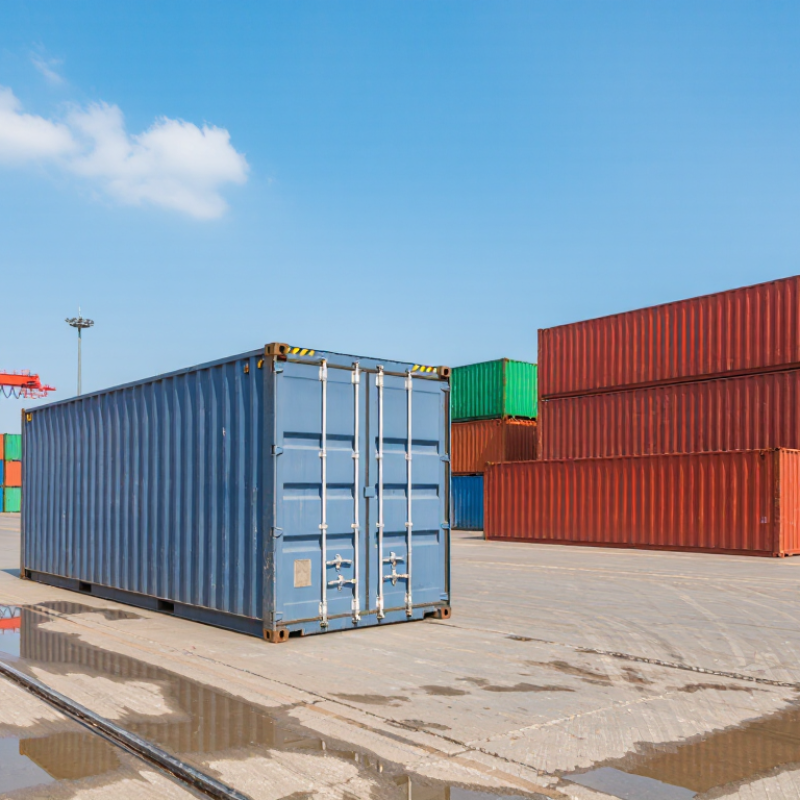
A standard 20-foot container is about 6.058 metres long, 2.438 metres wide, and 2.591 metres high externally. A standard 40-foot unit is about 12.192 metres long, with the same width and height. High-cube models add roughly 305 millimetres of height. These are nominal outside measurements. Door openings and usable interior space are smaller. That detail matters when cargo is close to the limit.
Standards also support compatible corner fittings and handling equipment. Still, a specification sheet is not the whole story. Older or repaired containers may differ slightly, and actual interior dimensions vary by unit. For a close fit, check the container’s data plate and confirm measurements before loading. I would not plan around nominal dimensions alone.
Standard Shipping Container Sizes Used in China
Typical external dimensions of common ISO container types, shown in meters.
China commonly uses ISO-standard container sizes. Actual internal dimensions can vary slightly by container design and fittings.
Common 20-Foot and 40-Foot Container Dimensions
In China, common 20-foot and 40-foot containers follow familiar international dimensions. A standard 20-foot unit measures about 6.06 metres long, 2.44 metres wide, and 2.59 metres high externally. Inside, usable space is roughly 5.90 by 2.35 by 2.39 metres. That difference matters. Thick walls and corner fittings reduce the room available for cargo.
A standard 40-foot container is about 12.19 metres long, 2.44 metres wide, and 2.59 metres high outside. Its interior is approximately 12.03 metres long, 2.35 metres wide, and 2.39 metres high. A high-cube version adds about 30 centimetres of exterior height, which can help with taller cartons or equipment. Exact internal measurements vary slightly by construction and age. Check the unit itself.
For example, a 1.2-metre-wide pallet may fit through the doorway, yet leaving space for handling can be harder than the dimension chart suggests. Door openings are narrower and lower than the container’s exterior. Measure the largest item, including packaging, before planning a load. A chart is useful, but a tape measure gives the less tidy truth.
What Is the Standard Shipping Container Size in China? — Common 20-Foot and 40-Foot Container Dimensions
| Dimension or Specification |
20-Foot Standard Dry |
40-Foot Standard Dry |
40-Foot High Cube |
| Typical external dimensions (L × W × H) |
6,058 × 2,438 × 2,591 mm
19 ft 10.5 in × 8 ft × 8 ft 6 in |
12,192 × 2,438 × 2,591 mm
40 ft × 8 ft × 8 ft 6 in |
12,192 × 2,438 × 2,896 mm
40 ft × 8 ft × 9 ft 6 in |
| Typical internal dimensions (L × W × H) |
5,898 × 2,352 × 2,393 mm |
12,032 × 2,352 × 2,393 mm |
12,032 × 2,352 × 2,698 mm |
| Typical door opening (W × H) |
About 2,340 × 2,280 mm |
About 2,340 × 2,280 mm |
About 2,340 × 2,585 mm |
| Approximate internal capacity |
About 33 m³ |
About 67–68 m³ |
About 76 m³ |
| Typical tare weight |
About 2,200–2,400 kg |
About 3,700–4,200 kg |
About 3,900–4,300 kg |
| Typical maximum gross weight |
Often around 30,480 kg |
Often around 30,480 kg |
Often around 30,480 kg |
| Typical payload at a 30,480 kg gross rating |
About 28,000 kg |
About 26,000 kg |
About 26,000 kg |
| Common use |
Dense or heavy cargo and smaller shipments |
General cargo with greater floor space |
Bulky or taller cargo needing extra internal height |
Note: These are typical ISO container dimensions and weights, not guaranteed specifications. Actual internal measurements, tare weight, maximum gross weight, and payload vary by container design and manufacturer. Check the container’s CSC plate and shipping documentation before loading.
Interior Measurements, Capacity, and Payload
What Is the Standard Shipping Container Size in China?
Standard dry containers used in China generally follow the same international dimensions as containers elsewhere. ISO 668:2020 specifies external dimensions and ratings, but interior measurements vary with construction. Small differences matter. GDV’s Container Handbook gives typical interior dimensions of about 5.90 × 2.35 × 2.39 metres for a 20-foot container, providing roughly 33 cubic metres. A standard 40-foot unit is about 12.03 × 2.35 × 2.39 metres, or around 67 cubic metres. High-cube containers add height: about 2.69 metres inside and roughly 76 cubic metres of capacity.
Volume is not payload. A typical 20-foot container may carry close to 28 tonnes, while a 40-foot unit often carries around 26 tonnes because it weighs more empty. These are planning estimates, not promises. ISO 668:2020 defines container ratings, while the individual container’s safety-approval plate shows its maximum gross mass. Subtract the tare weight to estimate payload. Check the door plate. Pallets, door openings, and cargo placement reduce usable space; the cubic figure can look generous on paper but feel tight during loading. I would leave a margin rather than plan right up to the stated limit.
High-Cube and Specialized Container Variations
In China, a high-cube container keeps the familiar 8-foot-wide footprint but adds height. ISO 668:2020 gives common 40-foot high-cube external dimensions of about 12.19 m long, 2.44 m wide, and 2.90 m high. That extra foot matters. Standard-height containers are about 2.59 m tall. Internal clearance is lower, often around 2.69 m, because flooring, walls, and roof framing take space. Dimensions vary slightly between units, so check the container’s data plate and door opening before loading tall cartons.
High-cubes suit light, bulky freight, such as packaged furniture or insulation. UNCTAD’s Review of Maritime Transport 2024 reports 858.1 million TEU in global port throughput for 2023. TEU measures nominal container length, not usable cubic capacity. A high-cube may therefore offer more room without changing its nominal length category.
Specialized units trade some space for a specific function. Refrigerated containers have insulated walls and cooling equipment, reducing their internal volume. Open-top units allow loading from above; flat racks accommodate cargo that exceeds standard width or height. Check twice. A container’s actual capacity depends on its design and condition, and the right choice is not always obvious from the outside.
Factors That Affect Container Size Selection
In China, common shipping options include 20-foot and 40-foot containers, with high-cube versions offering extra height. Exact internal dimensions and payload limits can vary by container and carrier, so check the equipment specifications before booking. Nominal size alone is not enough.
Cargo shape often matters more than its total volume. A stack of cartons may fit neatly, while long pipes or unusually wide machinery can leave wasted space. Measure each load, including pallets, packaging, and any required clearance.
A pallet plan can look perfect on paper. Then a doorway or forklift approach causes trouble. That detail is easy to miss.
Weight is another key factor. Dense goods may reach the container’s permitted payload before using much floor space; bulky, light goods may fill the interior first. Consider how the cargo will be loaded and secured, too. Door access, loading equipment, delivery location, and onward transport can affect the practical choice. Ask the carrier or freight forwarder to confirm the container’s usable dimensions and weight limits for the planned route. There is no single best size, and estimates can be imperfect. A small measurement error may mean repacking.